
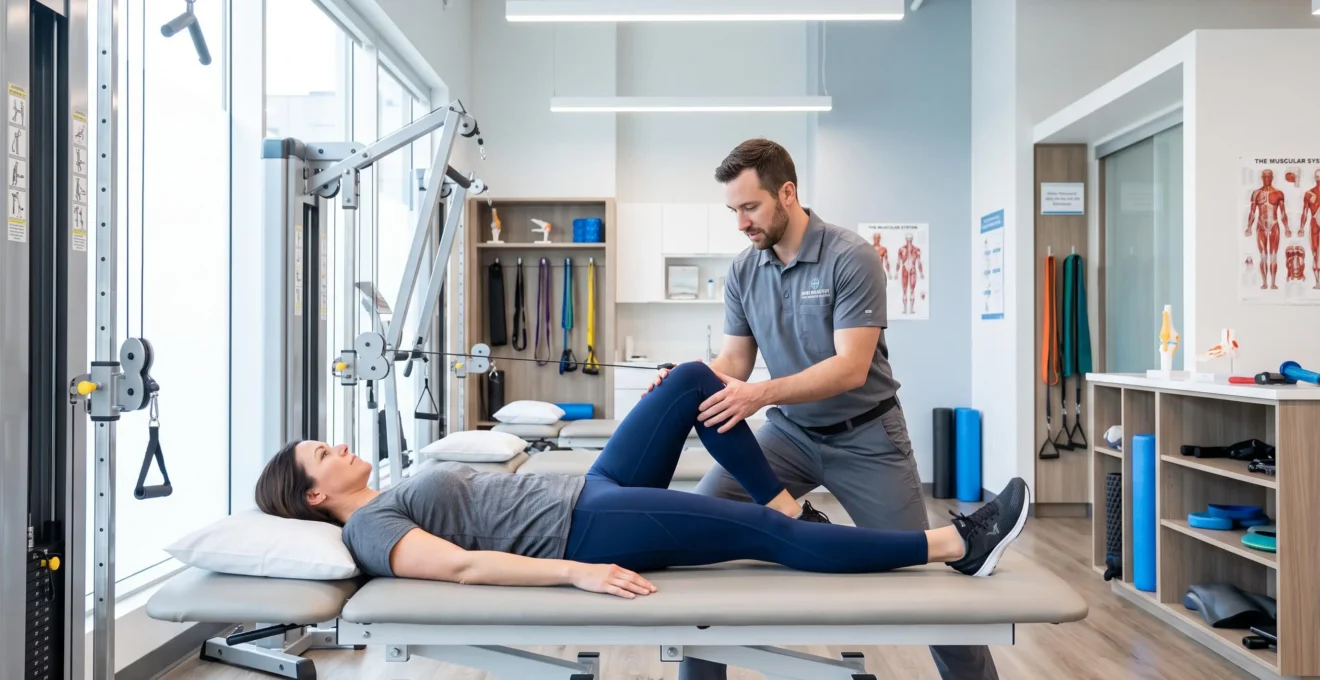
This content is provided for informational purposes only and does not constitute medical advice. Every patient’s recovery is unique. Consult your orthopaedic surgeon or qualified healthcare professional for personalized guidance regarding your specific surgical procedure and recovery.
Clinical data from major orthopaedic centers consistently shows that patient anxiety peaks not during surgery, but in the uncertain recovery period when distinguishing normal healing from concerning complications becomes critical. This guide translates evidence-based protocols into practical recovery expectations you can actually use.
Recovery isn’t a passive waiting game. The decisions you make in the first weeks—from pain management strategies to rehabilitation engagement—directly influence long-term functional outcomes and complication rates.
Post-operative recovery essentials in 5 key points
- Peak pain occurs within 48-72 hours post-surgery; multimodal analgesia protocols manage this more effectively than opioids alone
- Return to sedentary work typically takes 4-8 weeks; physically demanding jobs may require up to 3 months off according to Royal Berkshire NHS protocols
- Venous thromboembolism (VTE) affects 1.09% of knee arthroplasty patients, with pulmonary embolism carrying 0.78% mortality risk
- Physiotherapy engagement beginning within 2-4 weeks post-operation significantly impacts functional recovery milestones
- Red flag symptoms—fever above 38.5°C, calf swelling with warmth, sudden breathlessness—require same-day medical assessment
The immediate aftermath: your first 48 hours post-surgery
You’ll regain consciousness in the recovery room with your knee immobilized in a brace or continuous passive motion (CPM) device, depending on surgical protocol. Expect intravenous lines for pain medication, possible drainage tubes collecting surgical site fluid, and compression devices on your calves rhythmically inflating to prevent blood clots.
Pain intensity peaks between 48-72 hours post-operatively. This isn’t a sign something has gone wrong—it reflects the body’s inflammatory response to surgical trauma. Modern multimodal pain management combines regional nerve blocks, non-steroidal anti-inflammatory drugs, and controlled opioid use rather than relying on narcotics alone.
- Ice therapy applied in 20-minute intervals to reduce swelling and provide local analgesia
- Leg elevation above heart level when resting to minimize edema accumulation
- Ankle pumps and quadriceps sets performed hourly to maintain circulation and prevent muscle atrophy
- Assisted walking with crutches or walker typically begins within 24 hours for most knee procedures
- Sequential compression device use until you’re mobile enough to generate adequate blood flow independently
Nausea from anesthesia affects roughly one-third of patients in the first 12 hours. Anti-emetic medications address this, though persistent vomiting requires medical attention as it can disrupt fluid balance and pain control. Hospital discharge typically occurs 1-3 days post-surgery depending on procedure complexity and your pain control status. Before leaving, you’ll receive detailed instructions about wound care, medication schedules, and activity restrictions. Understanding these protocols reduces anxiety and complications—studies show patients who clearly comprehend discharge instructions experience fewer readmissions and better outcomes than those who leave hospital uncertain about post-operative care expectations.
Normal versus concerning immediate symptoms: Moderate pain managed by prescribed medication, swelling contained within surgical dressings, and limited range of motion are expected. Contact your surgical team immediately if you experience uncontrolled pain despite medication, fever above 38°C, excessive bleeding soaking through dressings, or inability to move your toes.
Recovery milestones: from surgical table to full function
Recovery timelines vary dramatically by procedure type. Arthroscopic meniscus repair follows a different trajectory than ACL reconstruction, which differs entirely from total knee replacement. Setting realistic expectations based on your specific surgery prevents the frustration of comparing your progress to inappropriate benchmarks.
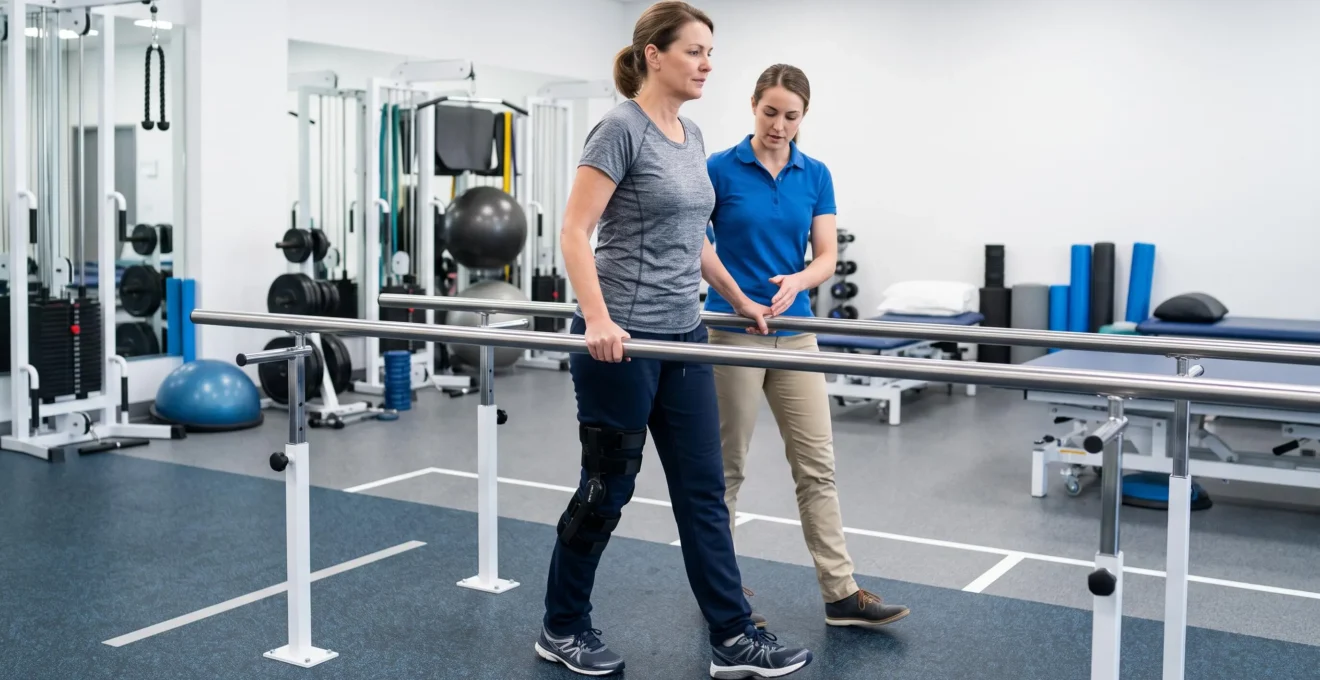
Weeks 0-2: protection and initial mobilization
The immediate post-operative phase prioritizes wound healing and preventing complications over aggressive mobility gains. You’ll maintain weight-bearing restrictions specific to your procedure—full weight-bearing may be permitted immediately for knee replacements, while ACL reconstructions often require partial weight-bearing with crutches for 2-6 weeks.
Pain medication transitions from hospital-administered intravenous or intramuscular injections to oral analgesics. Expect to use prescription pain relievers for 7-14 days, then transition to over-the-counter options as inflammation subsides. Swelling peaks around day 3-5, then gradually improves with consistent ice application and elevation.
Physiotherapy contact occurs within 2-4 weeks of your operation according to Royal Berkshire NHS Foundation Trust protocols. Initial exercises focus on regaining terminal knee extension and achieving 90-degree flexion—functional thresholds necessary for basic daily activities like sitting and stair navigation.
Weeks 2-6: progressive weight-bearing and range of motion
Most patients transition off walking aids between weeks 3-6 as quadriceps strength returns and proprioception improves. This doesn’t mean you’ll walk normally—expect a limp as your brain relearns movement patterns and muscles rebuild strength lost during the pre-operative pain period and post-surgical immobilization.
Range of motion goals target 0-degree extension (fully straight leg) and 110-120 degrees of flexion by week 6. These numbers matter because they determine your ability to perform essential functions: you need roughly 67 degrees to climb stairs, 83 degrees to stand from a chair, and 90 degrees to navigate most daily activities comfortably.
Consider the case of a 52-year-old office manager following total knee replacement. Week 2 brought barely 60-degree flexion with significant morning stiffness. By week 4, consistent physiotherapy sessions achieved 95 degrees, allowing independent car entry and toilet use without assistive devices. At 6 weeks, she reached 115-degree flexion and returned to sedentary work with periodic walking breaks. This progression illustrates how patient-specific factors—pre-operative range of motion, pain tolerance, rehabilitation adherence—create individual recovery trajectories that may accelerate or lag behind published averages.
Months 2-6: strength rebuilding and functional return
The rehabilitation intensity increases significantly after the 6-week mark. Patients who follow evidence-based rehabilitation protocols typically experience better long-term outcomes than those who cease formal physiotherapy prematurely. You’ll progress from basic range-of-motion exercises to resistance training, balance work, and sport-specific conditioning.
Functional milestones in this phase include independent stair climbing without handrail support, return to recreational activities like cycling or swimming, and gradual reintroduction of impact activities. Complete recovery including full strength restoration and confidence in the knee may take 6-12 months depending on surgery complexity and individual healing factors.
| Milestone | ACL Reconstruction | Meniscus Repair | Total Knee Replacement |
|---|---|---|---|
| Full weight-bearing | 2-6 weeks (protocol-dependent) | Immediate to 6 weeks (repair type) | Immediate with walking aid |
| Return to sedentary work | 2-4 weeks | 1-2 weeks | 4-8 weeks |
| Return to sport | 9-12 months (with clearance testing) | 3-6 months | Low-impact only (golf, swimming) |
| Physiotherapy duration | 6-9 months intensive | 6-12 weeks | 3-6 months |
Pain, swelling, and discomfort: what’s normal and what’s not
Pain assessment after knee surgery requires distinguishing between expected post-operative discomfort and symptoms indicating complications. Normal surgical pain follows a predictable pattern: intense in the first 48-72 hours, then steadily declining over 2-3 weeks. Pain that suddenly worsens after initial improvement warrants investigation.
Advanced pain management protocols, such as those implemented in specialized orthopaedic units performing extensive knee surgery volumes, combine multimodal analgesia with early mobilization strategies to optimize both comfort and functional recovery.
Swelling represents your body’s normal inflammatory response but should gradually decrease week over week. Persistent or increasing swelling beyond the first month may indicate overactivity, infection, or mechanical problems requiring clinical assessment.
| Symptom Category | Normal Recovery | Warning Signs |
|---|---|---|
| Pain level | Moderate, steadily decreasing, controlled by prescribed medication | Severe uncontrolled pain, sudden pain escalation after improvement |
| Swelling pattern | Gradual reduction after first week, responsive to ice and elevation | Increasing swelling beyond week 2, hot swollen calf, asymmetric leg swelling |
| Wound appearance | Clean incision edges, minimal clear drainage, healing progression | Spreading redness, purulent discharge, wound dehiscence, foul odor |
| Temperature | Low-grade fever (<38°C) in first 48 hours | Fever ≥38.5°C, persistent fever beyond 72 hours, fever with chills |
Recognizing complications: when to contact your surgical team
The most frequently overlooked aspect of recovery involves distinguishing routine post-operative concerns from complications requiring urgent intervention. Delaying treatment of infection, thromboembolic events, or mechanical failures can transform manageable problems into serious long-term complications.
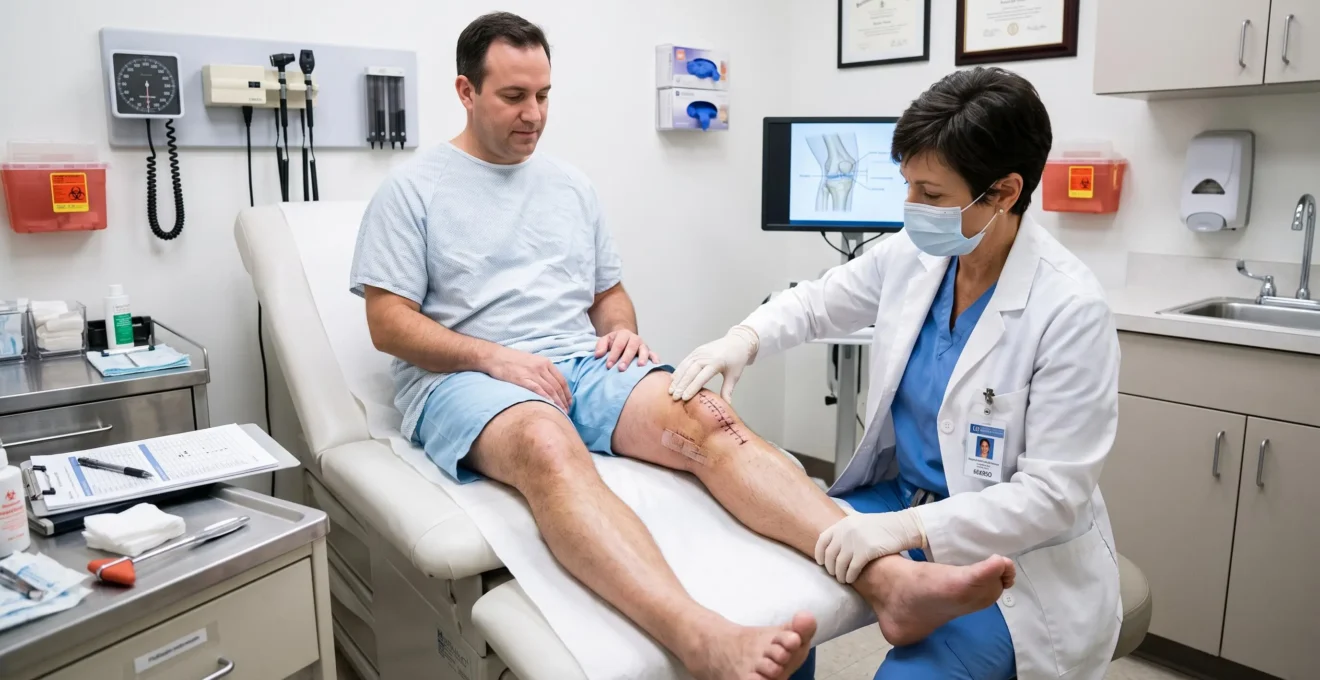
Emergency symptoms requiring immediate accident and emergency presentation: Sudden breathlessness or chest pain (possible pulmonary embolism), severe calf pain with swelling and warmth (deep vein thrombosis), fever above 38.5°C with wound changes (infection), complete inability to bear weight after previously achieving it (possible implant failure or fracture), loss of sensation or circulation in foot (neurovascular compromise).
Infection warning signs requiring same-day assessment
Surgical site infections develop in approximately 1-2% of knee surgeries despite sterile technique and prophylactic antibiotics. Early infection typically manifests between days 3-14 post-operatively, though deep infections can emerge months later, particularly around knee replacement implants.
Classic infection warning signs include progressive wound redness extending beyond the incision margins, increasing warmth concentrated around the surgical site, purulent drainage (thick yellow or green fluid), and systemic symptoms like fever and malaise. Same-day assessment is warranted if you develop fever above 38.5°C combined with any wound changes, or if clear drainage suddenly becomes cloudy or foul-smelling.
Circulatory complications: DVT and pulmonary embolism risk
Venous thromboembolism (VTE) represents the most serious common complication following knee surgery. According to comprehensive 2025 data published in Elsevier analyzing contemporary total knee arthroplasties, VTE prevalence reaches 1.09% overall, comprising 0.67% deep vein thrombosis and 0.42% pulmonary embolism cases. Pulmonary embolism carries a mortality prevalence of 0.78%, making recognition and urgent treatment vital.
Deep vein thrombosis typically presents as progressive calf swelling, tenderness, warmth, and pain that worsens with walking. Pulmonary embolism symptoms include sudden breathlessness, sharp chest pain worsening with deep breaths, rapid heart rate, and occasionally coughing blood. Any suspicion of VTE requires same-day medical evaluation—diagnostic ultrasound or CT imaging confirms the diagnosis and guides treatment.
Mechanical problems and joint instability
Mechanical complications manifest differently depending on your surgical procedure. ACL reconstruction patients may experience sudden giving-way episodes suggesting graft failure. Knee replacement patients might notice progressive clicking or catching sensations indicating implant positioning issues. Sudden loss of motion after previously achieving rehabilitation goals warrants investigation.
- If you experience fever ≥38.5°C with wound redness or drainage:
Contact surgeon within 4 hours or attend same-day urgent care for infection assessment
- If you develop sudden breathlessness, chest pain, or severe calf swelling:
Call emergency services immediately—these are potential thromboembolic events
- If pain suddenly worsens after initial improvement or remains uncontrolled:
Telephone surgical team within 24 hours for clinical assessment and medication adjustment
- If swelling persists beyond 6 weeks or progressively worsens:
Schedule follow-up appointment to evaluate for mechanical problems or underlying inflammation
Frequently asked questions about knee surgery recovery
When can I safely resume driving after knee surgery?
Driving resumption depends on three factors: which knee was operated on (right knee delays driving longer due to brake pedal operation), whether you’ve discontinued opioid pain medications, and your ability to perform an emergency stop safely. Most patients resume driving 4-6 weeks post-surgery for right knee procedures, potentially earlier for left knee operations in automatic transmission vehicles. Always confirm with your surgeon before resuming driving.
What sleeping positions work best during recovery?
Sleep on your back with a pillow under your knee for the first week to manage swelling, then transition to your preferred position as comfort allows. Avoid prolonged periods with the knee bent beyond 90 degrees in the first 2-3 weeks. Side sleeping becomes comfortable around week 3-4 for most patients.
When can I shower or bathe safely?
Showering with wound protection (waterproof dressing or plastic covering) typically begins 48 hours post-surgery. Full submersion bathing should wait until surgical wounds have completely healed and any sutures or staples have been removed, usually 10-14 days post-operatively.
How long should I expect to need pain medication?
Prescription pain medication use typically lasts 7-14 days post-surgery, transitioning to over-the-counter anti-inflammatory medications for another 2-4 weeks. Some patients require occasional pain relief for up to 6-8 weeks, particularly at night or after physiotherapy sessions. Increasing pain medication requirements after initial reduction suggests complications requiring clinical review.
Will I need ongoing physiotherapy supervision or can I self-manage exercises?
According to NICE Quality Standard QS206, supervised rehabilitation is recommended for patients experiencing difficulties managing daily activities or ongoing functional impairment. Most patients benefit from 6-12 supervised sessions over 3-6 months, then transition to independent exercise programs.
Recovery from knee surgery demands active participation rather than passive waiting. The quality of your rehabilitation engagement in the first 12 weeks significantly influences long-term functional outcomes—clinical data demonstrates that patients who adhere to structured physiotherapy protocols achieve superior results compared to those who approach recovery haphazardly.
- Establish pain management routine using multimodal approach rather than relying solely on opioid medications
- Schedule physiotherapy appointment within 2-4 weeks post-surgery as recommended by NHS protocols
- Monitor for red flag symptoms daily: fever above 38.5°C, progressive wound changes, sudden breathlessness, severe calf swelling
- Maintain consistent exercise routine including hourly ankle pumps and quadriceps sets in the first two weeks
- Document your recovery progress weekly to identify stalls or setbacks requiring clinical input
Rather than viewing recovery as a countdown to normalcy, recognize it as an opportunity to rebuild strength and movement patterns better than your pre-surgical baseline. Many patients emerge from structured rehabilitation with improved function, reduced pain, and greater confidence in their knee than they experienced in the years leading up to surgery.
This guide provides general recovery information and cannot account for individual patient factors. Recovery timelines vary significantly based on surgery type and post-operative protocols differ between surgeons.
Risks of misinterpretation: Self-diagnosing complications without medical consultation may delay critical treatment. Prematurely resuming restricted activities risks graft failure or implant loosening. Ignoring red flag symptoms can lead to permanent damage.
Consult your operating orthopaedic surgeon, hospital physiotherapy department, or emergency services for acute concerning symptoms.